
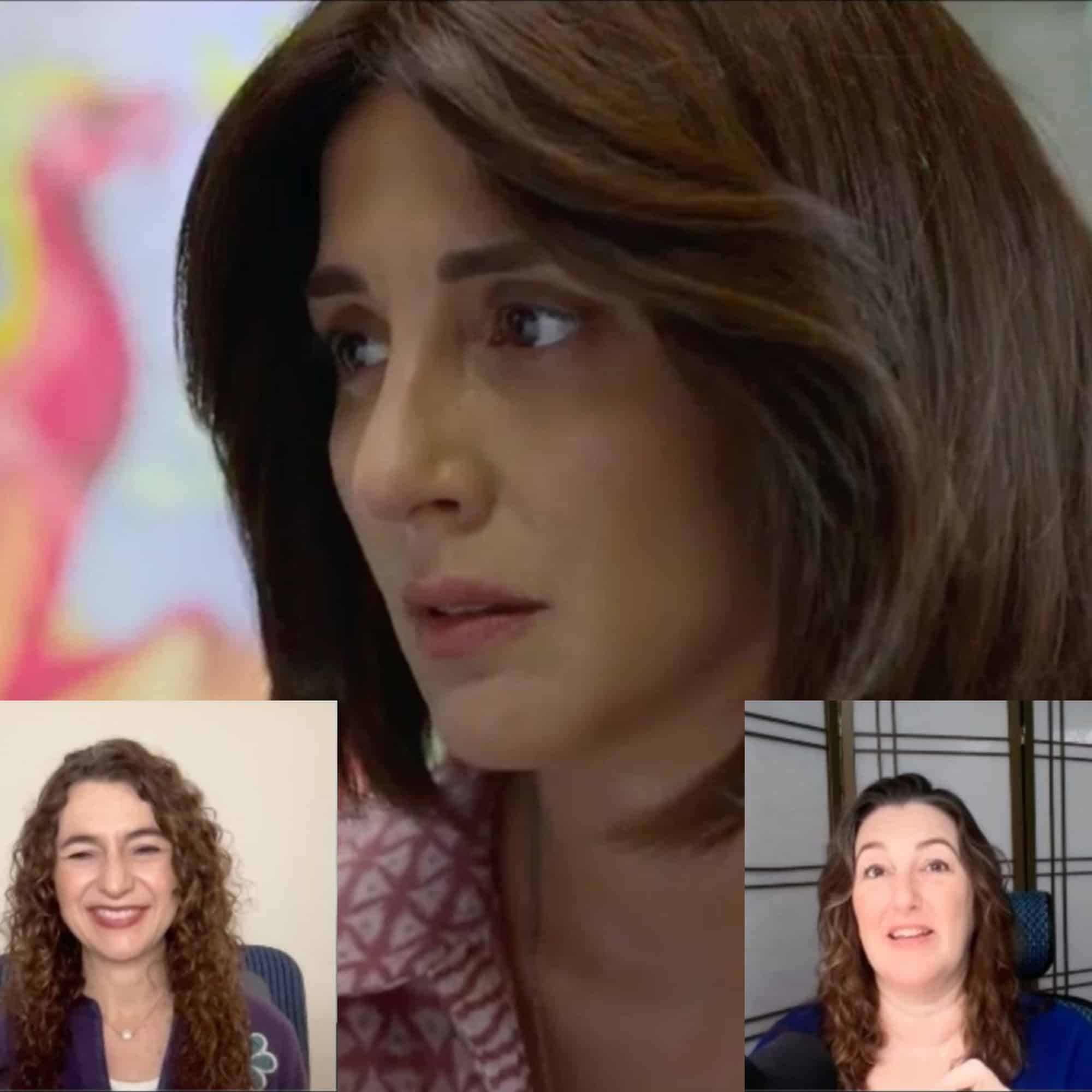
Family constellations facilitators Rachel Alexandria and Liza Miron react to Netflix’s Another Self, exploring what the show gets right, what’s dramatized, and how family constellations work in real life. In this video, family constellations facilitators Rachel Alexandria and Liza Miron discuss family dynamics, unresolved grief, intuition, and the different stages of a constellation. They compare their facilitation styles with the practices portrayed in the series and explain how real-life workshops differ from television dramatizations.
They also discuss the importance of viewing family constellations as complementary to, rather than a replacement for, medical care.
💬 Have you watched Another Self?
What questions do you have about family constellations?
✨ Learn More About Rachel Alexandria Website: https://rachelalexandria.com/constellations/ Youtube: https://rachelalexandria.com/constellations/ Instagram: https://www.instagram.com/rachelralexandria/ TikTok: https://www.tiktok.com/@rachel.r.alexandria?_r=1&_t=ZP-987F3oI9RaY
✨ Learn More About Liza Miron Website: https://www.coachingandconstellations.com YouTube Channel: https://www.youtube.com/@LizaMiron Instagram: https://www.instagram.com/lizamironcoaching/
Full Transcript
Rachel Alexandria: [00:00:00] Hello and welcome to Two Family Constellations Facilitators React to the Netflix show, Another Self. I’m Rachel Alexandria. I’m a former psychotherapist turned executive coach and also a family constellations facilitator since 2010
Liza Miron: Hi, I’m Lisa, and I am a family constellations facilitator and trainer. I’ve been facilitating since 2014, and I’m excited to be here with you, Rachel. I’m excited for this
Rachel Alexandria: Me too. Me too. So w- the reason we are recording this video is, both of us have noticed in our family constellations practices that more people have been coming to our workshops because they found out about family constellations work due to this show, which is called Another Self. It’s a Turkish series.
probably if you’re watching this video, you already know about it because otherwise, why? Why would [00:01:00] you watch this? people are fascinated by this really wonderful, rich drama about three female friends’ lives, and the changes that they go through, both dealing with obstacles in life and difficulties, sicknesses relational and interpersonal problems related to them all starting to go to workshops, which are essentially family constellations, and they show a great deal of constellations-type work in this series.
So Lisa and I wanted to get together and talk about what’s accurate, what’s real, what is dramatization and just answer questions for folks who really like this show and are like, “Well, is this crazy, magical thing actually a real thing?”
Liza Miron: I’m so excited to, dive into this because there’s so many people that know about this Another Self, the, the series, and it’s such a [00:02:00] beautiful way to understand family constellations. But just like you said, you know, people are wondering then, is it really real? Is it just, you know, a series that they made to entertain and this is actually nothing that happens in reality?
So, I’m excited to dive from the perspective of family constellations into the series so that people can understand all these dynamics.
Rachel Alexandria: So let’s get into the first clip from the show that we have queued up. I believe that it’s when one of the main characters first meets Zaman, who is the person who leads the constellations. So let’s pull this up
[00:03:00] So that’s how this character meets him. She’s coming in because she’s saying, “I have a life-threatening illness and, you know, I’ve been doing medical stuff, but I think maybe your alternative treatment could help me.” First of all, let’s talk about, you know, how much can family constellations actually do something to help people with life-threatening illnesses?
Like, what’s your take on this? Has this ever happened to you, [00:04:00] that someone comes to your work and says, “I’m coming because I wanna work on my life-threatening illness”?
Liza Miron: I haven’t had that many people with life-threatening illness. I have had many people with different illnesses. And with family constellations, what I have understood is that there’s nothing that’s written in stone. There’s nothing that we can say that it’s the same for everybody because everybody has different experiences, they have different family systems, they have different trauma in their lives.
So everybody’s gonna be completely, completely different. I’ve had people that have had chronic illnesses that improve a lot and that they actually have, you know, they, they stop taking the medicine that they’re taking from the perspective of the doctor, you know, guided by the doctor. And I have people that still have the illness but improve their lives a lot.
Even with the illnesses, like they are at peace with it. And I have people that have less changes. I’ve seen everything, [00:05:00] and what I’ve noticed is that there’s like this sense at peace and improvement, and people come to look at the root cause of the illness. But it’s not the only thing that they’re doing.
They’re with their doctors, they’re with a nutritionist, they’re doing meditation. So
it’s like,
I think it’s all together, you
Rachel Alexandria: Yeah, we would, neither of us would ever recommend only doing family constellations to work on your medical problem. Partly because in the United States that would be very very actionable. Like, that would make us sue-able essentially. In the United States you have to be very careful about claiming that things can do anything like heal people if it’s not medicine.
Yeah, I, and I notice I’m always, like, very cautious when people come and say, “I have this really significant physical problem” because my experience, I, for me, I [00:06:00] believe that alternative treatments in addition to lots of things can help me recover, can help me get into a different place. I have absolutely healed things for myself such that they do not have much reoccurrence or they’re much less strong, and I’ve done it through things like family constellations, probably in addition to other interventions.
But yeah, If someone came to me with saying, “I have cancer do you think your treatment can help me?” I’d be like, “Well, it can’t hurt,” you know? And probably you’ll get some perspective at the very least. You might get something that helps change the course of what’s happening. But yeah, I would be very cautious in what I advise, and at the same time internally I’d be like, “Maybe.”
You know, I just probably wouldn’t say maybe out loud. I’d be like, “You’re gonna get something. You’re, it’s going to help support your [00:07:00] entire picture of treatment.” So what he calls it, Do you remember what, what Zaman calls the work?
Liza Miron: The expansion of,
Rachel Alexandria: of family or something.
Liza Miron: family, something like that
Rachel Alexandria: that’s part of why when people watch season one of this show, they have to look it up.
They’re like, “What is this thing that’s happening, and is this a real thing?” Because he’s not in this, first season of the show, which has gone for three seasons. He doesn’t refer to it as family constellations. But you told me something really interesting about this man
Liza Miron: Yeah. You know, it’s interesting because I actually had a client that came to me and said that she knows him, and he’s actually a family constellations facilitator in Turkey. and it makes sense because the whole series really talks about the foundations of family constellations throughout the series.
there had to be many people that really know about family constellations behind it to be able to do [00:08:00] it, and do it so beautifully
Rachel Alexandria: Yeah, definitely. Definitely uh, people know about it. And the way that he does it, at least in some of the first ways that they show it, feel definitely like a variation to me. They don’t feel like the traditional way that I learned and, and maybe not like the tr- you and I learned from slightly different lineages, right?
But yeah, it definitely feels so close that it’s like, well, it’s obviously a branch of this or someone’s, evolution of the work. Which I actually love because there’s a lot of purists in the family. There’s, just like any… For those who don’t know, when you get into any kind of serious modality, there’s always gonna be be people who are like, “No, the originator made it this way, and this is the only way you can do it.”
And then of course, there’s other people who are like, “There’s…” No, I mean, everyone gets to [00:09:00] innovate it with how it works for their system, as long as you’re still in integrity to, to helping people, right? So he’s clearly come from a different lineage or innovated it in some sort of way
Liza Miron: So my style looks quite similar to his style of doing family constellations. And something that that I wanted to share what you were saying about family constellations. A story that I heard again, a story I, I wasn’t there, I cannot tell you if it’s true, but my understanding is that they told Bert Hellinger, “Please put like an institution.
Please put a format. Please say constellations are like this: A, B, C, D.” And he said, “No, because that’s gonna put like a jail into the format of family constellations and a structure that’s not gonna be be- able to be flexible and to adapt.” He said, “I’m not gonna do that because I want constellations to, to change with time, with people, to the circumstances.”
And I think that’s a gift because, you know, you see constellations with, with horses, with water, [00:10:00] the very traditional way, something in the middle, something… You know, recently I saw somebody doing it with astrology and bringing the, the aspects of astrology and it’s like it, it really has adapted in so many different ways to the person, to the situation, to the, to the place.
I think that’s a gift, and I think that it will continue to evolve, but this is why you might find so many different types, and it’s still family constellations, but they look completely different
Rachel Alexandria: Yeah, and people might call it something different, especially if there’s a translation, which I’m kind of wondering if that’s more what it’s called in Turkey is, like, expansion of the family or whatever.
Liza Miron: Hmm,
maybe.
Rachel Alexandria: Yeah.
Liza Miron: thought about that. Maybe
Rachel Alexandria: the… One of the traditional ways that I learned is you start with getting a genogram of the family.
I don’t do this in my work. I mean, it might come up if it needs to when I’m doing the interview with a client. But yeah, there’s definitely people out there that are like, “You [00:11:00] can only do it this way” And it’s like Bert Hellinger, who was the originator of the work under the name Family Constellations, he innovated throughout his life.
And so when people look at the recordings and say, “This is how he’s doing it, you have to do it this way” It’s like, well, that was, like, 40 years ago. he didn’t still do it this way 40 years later. So yeah, I was, I was excited to see… I, I like… I love seeing different facilitators and how they do it.
And then in some part of me also is like, “No, I wouldn’t do it that way.” So let’s look at this next clip because I think part of what you see in this next thing is how much he’s in his intuition, his intuitive understanding, and not every facilitator works like this. So, you’ll see some of how he processes, So you’ll be seeing Sevgi from the first clip, and it’s, was it a month later, I believe? It’s, like, a month later [00:12:00] after she’s gone to Constellations, and we haven’t yet in the show seen anything of what happened because Zaman tells her, “Don’t talk about it for a month.”
that’s his prescription for everybody. You, you went through a n- a Constellations experience. Now don’t talk about it for a month. So now she’s about to explain to her friends what happened
[00:13:00] So here, like that is such a short journey from setting a representative to them immediately getting very deep and specific to a memory, which he has not instructed them to do, and he immediately knows the age. What do you say about that? What do you think about that?
Liza Miron: So I have no idea on how he thought of the age. I think that’s a little bit, like, extremely specific. And at the same time, there’s m- my style of doing family constellations, the [00:14:00] way that my teacher you know, understands the phenomenological movements. You know, when somebody goes down to the ground, it’s usually connected with somebody dead, that they’re looking at somebody dead in the family system.
Rachel Alexandria: For sure
Liza Miron: so that part I have seen in, you know, similarities, that it’s like th- they’re looking at somebody dead. Like, there’s a death, they’re attached, they’re connected to that. The part, you know, sometimes the representative might say, “I feel like a little girl.” And then you say, “Oh, you know, maybe something happened when you were a child.”
I haven’t seen something as specific of, you know, five and six years, but I have seen representatives, like, say, “I, I feel like a little girl. I feel like a little boy.” And suddenly, you know, I’m looking at the ground and and then kind of like you ask, you know, “Does this make sense to you?” And at the same time, I love that they do it like this in the f- in, you know, in the series, how they connect all those dots and explanations because, you know, you get the stories that we’re not able [00:15:00] to get when we’re doing the constellations with so little information, so
Rachel Alexandria: Yeah. I think this is one of the parts I totally agree with you. And I, I think what I wanna highlight about what’s different from going to a live workshop versus this TV show is this is a dramatis, dramatis… I can’t say that word. They have made this more dramatic than it would be in an actual workshop.
My experience is a representative when set up, sometimes people do react very intensely very quickly, but my experience is that a person wouldn’t move that fast from being set up to immediately going and into, like, such intense emotion without other representatives to react with. My experience is that it would take a little bit more time.
It’s kind of like tea. It needs to steep a bit. And it might be more like something happening if there were other representatives set [00:16:00] up also. But he, as far as we see in the show, he hasn’t told any of them any of the content. Sevgi’s come in. He’s been like, “Pick a representative.” She picks one, and something immediately happens.
I would say that is faster and more dramatic than it would be in a real-life workshop, and it does depend on the facilitator because each facilitator sets their container and their group, you know. And so he’s a highly intuitive man. My teacher was like this also. He just saw things. ‘Cause I asked him at one point, “How did you know this?”
And he’s like, “I see golden lines, and I see things connected.” And I was like, “Whoa. Very mystical man.” So it could be that this facilitator just has that ability somehow when people come into his field, what we call the knowing field, that that’s part of what he evokes. But I do think this is sped up and dramaticized for the sake of the show.[00:17:00]
So
Liza Miron: wanted to add that yes, conste- because constellations take a long time. I mean, I don’t know how long you take with the constellations, but they’re usually half an hour, one hour. I’ve seen people do them in three hours. So I mean, if you have a series of one, you know, of one hour and you really need to speed things up, so I understand behind why they would do it.
They cannot take the time that it usually takes. They usually take a long time, and movements are slow like you were saying, Rachel. And they cannot do it that way if they wanna make an, a, you know, an entertaining series, so
Rachel Alexandria: Oh yeah, it totally makes sense. Like you have to speed it up for the sake of a viewing audience. I think people also understand you don’t get fit in a 10-second montage, right? Like you have to speed things up so that people who are just sitting and watching can take it in. But agreed, the workshops tend to take longer per constellation.[00:18:00]
The good news is when you’re inside of the container in the field, it will feel like it moves much faster, but it doesn’t. People will be like, “We’ve been doing this for an hour?” Like they have no idea. Okay, let’s see what happens. This is Sevgi going into her memory as he suggests what happens when you were five or six
So Zaman’s brought in a representative now for the [00:19:00] father And for the man who killed him
Liza Miron: And can you pop
Rachel Alexandria: So here, instead of showing what happened, they are [00:20:00] letting the constellation move through what the people who were involved need to process. now they’re starting to dive into what, what is the deeper truth, not just the events that happened
Liza Miron: Yes. And I think you saw the, the murderer there that’s crying also, and that’s showing like the, you know, he didn’t want to kill. He wanted to only hurt, and it’s that heaviness that he also carried because of what happened. So they’re representing it that way. It’s not that that actually happened, that the murderer was there crying with them.
That’s part of, like, the resolution of the constellation, of understanding all the different parts that that was connected to. And and I love how they represent and see the constellation and see the image of the story of the mom on top of, of Sevki, showing how she became a burden and that Sevki is carrying now the, the, [00:21:00] the grief, the, of her mom that lost her husband, and her mom started depending on Sevki, and Sevki became the responsible, the parent, the one that had to take care of the mom
Rachel Alexandria: Yeah. Yeah, I didn’t finish showing that part, but we can go back because that’s part of what they’re implying is related to causing her cancer. I mean, we wanna be careful again in the United States of saying that emotions cause illnesses, but we do know medically, scientifically that stress absolutely decreases your health and can be at the root of a lot of health problems.
So, I think would it be useful here to explain to folks what are the stages of a constellation? Because, you know, you said that this is moving into a resolution. Can we- you wanna talk a little bit more about the stages of what happens in a constellation?[00:22:00]
Liza Miron: That for sure, and I’m wondering if there’s different stages for you and for me ’cause we do it in different ways. So I’ll explain my s- you know, the way of doing constellations, and then I would love for you to explain yours and see the differences. I, People you know, get a, a constellation, and I don’t do a previous interview.
I know some people do interviews before they actually do the constellation in a group session
Rachel Alexandria: Like we saw with Zaman. Like,
Liza Miron: yeah
Yeah. But I don’t do a previous interview, and I don’t want to know a lot of details about the client. I just want to know the topic in a few words. So I ask the client, you know, “What’s your topic?”
And and I’m gonna explain the group session. So the client sits beside me. The client says, “This is my topic.” And according to what the topic is, I ask her to choose representatives. So if there’s a specific issue, it might be the client and the issue, so two representatives. Sometimes, you know, [00:23:00] I have a lot of clients that come, and they wanna work with abundance, and abundance has a clear connection with our mother.
So I– and part of the way that I do constellations is always to test internally, like to get some guidance on the next steps. So it’s not so much mental, but more like connecting to guidance. So for example, if somebody wants to do abundance, then I connect to guidance and see if I’m gonna represent the client abundance, and and the issue of not having abundance and, or, or the mother.
So I see who needs to be represented. I ask the client to choose. The client doesn’t get up and touch. That’s another style. The client sitting down chooses the representatives, and the representatives just stand up and start connecting to the field, to the energy, to the movement, to the emotions. And according to what they are connecting to gives us information, and I tell the client to say the healing phrases.
I don’t tell the representatives to see the– to [00:24:00] say the healing phrases. I only tell the client. And after the client says the healing phrases, we see what that causes and the movements of the representatives, and that’s how we continue doing the constellation
Rachel Alexandria: Interesting. Yeah, cool. I don’t do a pre-interview like they showed with Sevgi. Like I don’t meet a client beforehand and have a conversation about what they wanna work on. I, and, and yeah, facilit- lots of facilitators do things differently. Lots of facilitators have the client for constellations picked out ahead of the workshop.
I offer open workshops most of the time where, like a group of people can come and the clients for the work will show up, will rise up out of the… whoever shows up that day. So I definitely don’t do pre-interviews. The way I was taught, I’ll invite people in the group to say what they might wanna work on.
Usually they’ll [00:25:00] be Anywhere from three to five or six people who say, “Yeah, I, I feel like I wanna work something today.” And I’ll go around the room and just be like, “Give me just, like, a snippet of what it is.” You know, some- somebody’ll be like, “Oh, I, you know, my mom and I have always had problems.” And some people will try to go into, like, a whole story.
Like my trainer before me, I try to keep them to a short thing, and at the same time, what I’ve noticed over the years is that some people have such a need to express, and sometimes cutting off that expression does more harm. So for, for me, like, I, like it’s … it, it damages some of the trust. So it depends on h- where they’re at.
Like, I kinda feel it out, and I feel out the temperament of the room. If people are kind of like, “Oh, okay already” , then I’m like, “Okay, I feel like I have enough, thank you.” And some people I’ll just say, “You know, I, I don’t need [00:26:00] to … Like, let’s keep the … let’s not go too much into the story. Let’s just … give me, give me, like, the title of the book,” right?
And then when I choose a client from the room, I’m doing that with guidance or intuitively. Like, I sort of sit and tune in, and my question is always, “Whose constellation in this moment is going to best serve everyone here?” So it is less about serving a client who’s pre-picked beforehand, and more about everyone who comes to the workshop is going to get something that they need.
That is always my orientation. So then someone just kind of highlights in my head, and I’ll bring them forward. They come sit down by me, and then I do a little bit of an interview. And it … Like, I don’t need lots of information. I’m just looking for enough to get the sense of where to start. And so if they give me very little, I might ask a couple more questions.
Like, I might [00:27:00] ask family tree questions, How many siblings did mom have?” You know? Or, or What’s your current relationship with your father?” Or whatever. That might come in. If somebody’s given … like, trying to give a lot, I’m like, “Okay, let’s … again, let’s keep it … Let’s see what shows up in the field.”
I do invite people to go up and make physical contact. That’s probably half because I think it’s more convincing and supportive for people’s brains who are experiencing it, honestly. So yeah, I see that it can work either way. Like, I absolutely believe that it can work where a person just says, “You over there, you over there.” And actually, in my constellations, people, even though I show ahead of time how to pick representatives, people often lately are just kind of like wanting to point at people.
So we’ll see if I make an adjustment. Maybe my work is evolving where we don’t need to do that. For people who are brand new, I kind of feel like it’s [00:28:00] just n- it feels more real, but maybe I’m the one stuck on it and it’s not needed, so we’ll see. But I was trained, like you get up, you make physical contact, you put, you know, the person who’s the client puts their hands onto the hands of the person who’s the representative, and they make eye contact while the client thinks about the one this person is going to represent, and they tell us out loud who it is.
And so there’s just kind of a, there’s a deepening, especially for people who’ve never represented before because their analytical mind can get in the way of the information they start getting, and then they get like, “Well, I don’t know if this is me,” you know?
What we’re seeing with Zaman’s constellations also is obviously a group of people who have done this repeatedly. So there’s not much in terms of any of that confusion. so he’s saying to the mom, Can you be with your, like connect [00:29:00] with your husband?” And she’s like, “No, I’m completely focused on my daughter
So that’s the part you were mentioning. So, and we were gonna talk about the stages of a constellation, right? So for me, there’s the setup, right? There’s what the client says that they want to work on. The initial setup is the cast of characters that I feel are applicable to what they’ve got going on, which they may be like, “Oh yeah, I have a problem with my sister, so it makes sense to represent my father, my mother, and my sister, and me.”
But it might be you know, I’m [00:30:00] having a hard time, like you say, with abundance, and so I get the sense of like, just like you, like, oh, does, you know, does a parent need to be brought in? Does it need to… And w- like a lot of times I’ll represent money itself. Somebody might be like, “Oh, I’m having trouble with a romantic relationship, like finding who I want to be with.”
And if I ask a bunch of questions, I hear that maybe there’s something going on with a brother or whatever. Like all that to say the initial setup, sometimes it’s super obvious probably to people who are listening and to the client like, “Yes, these are the people I’m having the problems with.” And sometimes it might be like I get an intuition to set up something that might seem on the surface unrelated.
The representatives come in, they are set up, the client observes, and then I start to move around the circle. So I do this differently than we initially see with… [00:31:00] Well, no, I guess we see Zeman go over and interact with people. So at first I’m just taking the temperature. I’m seeing, I’m asking each person to report how they’re doing, what they’re noticing, and I’m also standing in the constellation next to people and with people so I can start to use my body as an instrument to feel what they are also feeling.
I think this is similar for you, yeah?
Liza Miron: Sometimes I stay sitting down the whole time, sometimes I stand up, sometimes I represent as well. It’s different each time.
Rachel Alexandria: Hmm.
Liza Miron: Most of the times I’m sitting down
Rachel Alexandria: Interesting. I’ve… Yeah, I have seen other facilitators, like I’ve watched Francesca Mason Boring facilitate that way. I feel like my trainer, Mark, most of the time was up and moving around unless something got stuck. That’s usually when I sit down, is when something’s taking time to unfold or it’s just not moving at all.
But that’s kind of in like a second stage, [00:32:00] right? There’s showing initially what the client might recognize in the picture of the people, and then the second stage is kind of like what truth, what story that the client might not have been aware of can start to surface. What’s been unconscious that’s being made conscious?
And so you might see things like how Sevgi did. “Oh, my mother wasn’t actually at the carnival with us, but this is energetically what happened. My father was killed and my mother ran and clang to me… clung to me.” That’s energetically what ha- So there’s an unconscious or unaware truth that they represent.
And then there’s the third stage when the unconsciousness the unconscious things start to come up to be spoken about. There’s, like some relief in just that sometimes, in naming things and in seeing them. And then there’s, like a [00:33:00] final step, I would say, and these are pretty loose, right? They’re kind of happening over time like a, like a movie, like it’s a beginning, middle, end kind of thing.
The final stage is like, what… h- where can we bring this in resolution for what this particular constellation wants right now? You know, and sometimes it’s doing some acknowledgments. You know, you see, Zaman saying to the mother, “Can you make a different choice here?” The mother’s representative. And she says, “No, I cannot.”
But we don’t see the rest of that constellation at this time in the show, so we don’t know what happened next. Based on how we see Sevgi with her mother, I wonder if that one, she wasn’t… They weren’t able to get the mother to make a different choice because she was too fixated. But sometimes, yeah, constellations might end up with a big group hug because everyone’s said what they need to say.
They’ve seen each other differently. They’ve received support, and then [00:34:00] they can actually come together and be supportive of each other. And sometimes people are very stuck, and the main movement is just that the client now understands something different, and they are m- able to move into a little bit of more of acceptance or a little bit more of letting something go, but it is some kind of further resolution.
That’s what I would see as the, the stages. What about you?
Liza Miron: Yeah similar and in the sense that also it doesn’t go like A, B, C, D. But it’s like, the family constellations are always so, you know, different, varied, and many things happen at the same time. So in my constellations then the, there’s the client here with an ancestor, and maybe there’s the mother here with something else going on, and something here going on.
It’s like several movies going on at the same time. So you kind of like look a little bit at this one, look at this one. This one is resolved. Look at this one. This is not resolved yet. You go [00:35:00] back to this one, then you go back to this one, and it’s like all together at the same time. So it’s a… What you shared, but not in order, but like kind of like all together and, and happening at the same time.
And what we want is there’s that acknowledgement, that understanding, that awareness and that shift that, where the representative the c- of the client or the client, there’s this moment that a release. Like things… And again, each constellation is gonna look different according to the client, the life, the work that they’ve done on their own.
I’ve noticed a difference when clients have been doing a lot of personal work and when this is the first thing that they ever do of any kind of work. So they just look so different
Rachel Alexandria: They do. Yeah, I love that you mentioned that kind of the multiple things happening. The example we just saw is one where it’s a very, it’s a very deep and poignant experience, but it’s very simple. There is a dead [00:36:00] person who, in this constellation, he’s not having her interact with h- her father’s spirit at all, so it’s really just her experience and then her mother’s experience.
So there’s just this one thing happening. And sometimes constellations can be like that, where there’s less there’s fewer things to manage. I have similar experience to you where a lotta times, you know, it’s like, oh, we’re gonna bring in mother and father and, you know, a sibling or something like that, and then it promptly becomes the sibling’s having a thing going on with the client, the father’s absent and we need to bring in something for him, and so then he’s having a process with his ancestor, and then the mother’s do- And my trainer used to refer to it as a thir- a three-ring circus, and part of the facilitator’s job is to be the ringmaster because they are all doing different things at different times.
And he, sometimes he would be like, “There are three or four constellations happening in this moment.” I think when you first get [00:37:00] started with facilitation, the goal is to keep it as small as possible so that you can manage because it takes a while to develop the ability to track all the different movements and keep attending to them in a timely…
It’s like cooking, right? You first gotta learn to cook an egg and then maybe you can start to learn to make a, beef bourguignon, which is like all timings and attentions and yeah. So here we’ve seen an important but a very, like, small scope of a constellation
Liza Miron: And that would make sense for a series. You know, you cannot start explaining all these different… And you know, Rachel, the way that my teacher does, because she has now she travels to many countries, and she has 100 to 100 people at the same time, you know, there when she’s doing the constellations.
And she says, “Whoever feels called to participate, you stand up and you start representing, and we don’t know what you’re gonna be representing.” So sometimes you start a constellation, [00:38:00] and in three minutes you have 20 people representing
Rachel Alexandria: I need to go see your teacher ’cause
Liza Miron: Oh, she’s gonna be in LA
Rachel Alexandria: Ooh. Yeah, you have to send me the details. I feel like my work is wanting to expand to do bigger groups also, and I would love to see that exam- ’cause I’ve never seen anybody… Everybody I’ve ever seen facilitate, all the different teachers I’ve seen, have tighter reins on things.
I very rarely see people who are more expansive like that, which is kind of more how I am and like to be. So I would love to, I would love to be inspired by that and be taught by that. Well, those are the clips that we have of the first episode, because the first episode of this show is setting up a lot more of the emotional stakes and the friendships and, and other things about their ongoing current lives.
As the series goes on, we see more things of constellations and other members of this group [00:39:00] go through their own experiences. So we will get to those in further videos. But it’d be helpful for us to know if you liked this, if you’re interested in more, you know, reactions to the show Another Self, and what questions you have about family constellations, because you’ve got two constellations facilitators here ready to answer
Liza Miron: Yeah. Well, thank you so much for, for your time, Rachel, and yeah, for doing this with me. I’m really so excited about this. I love the series, and I love what it has brought to the world of family constellations. So I look forward to our next time getting together
Rachel Alexandria: Yeah, me too